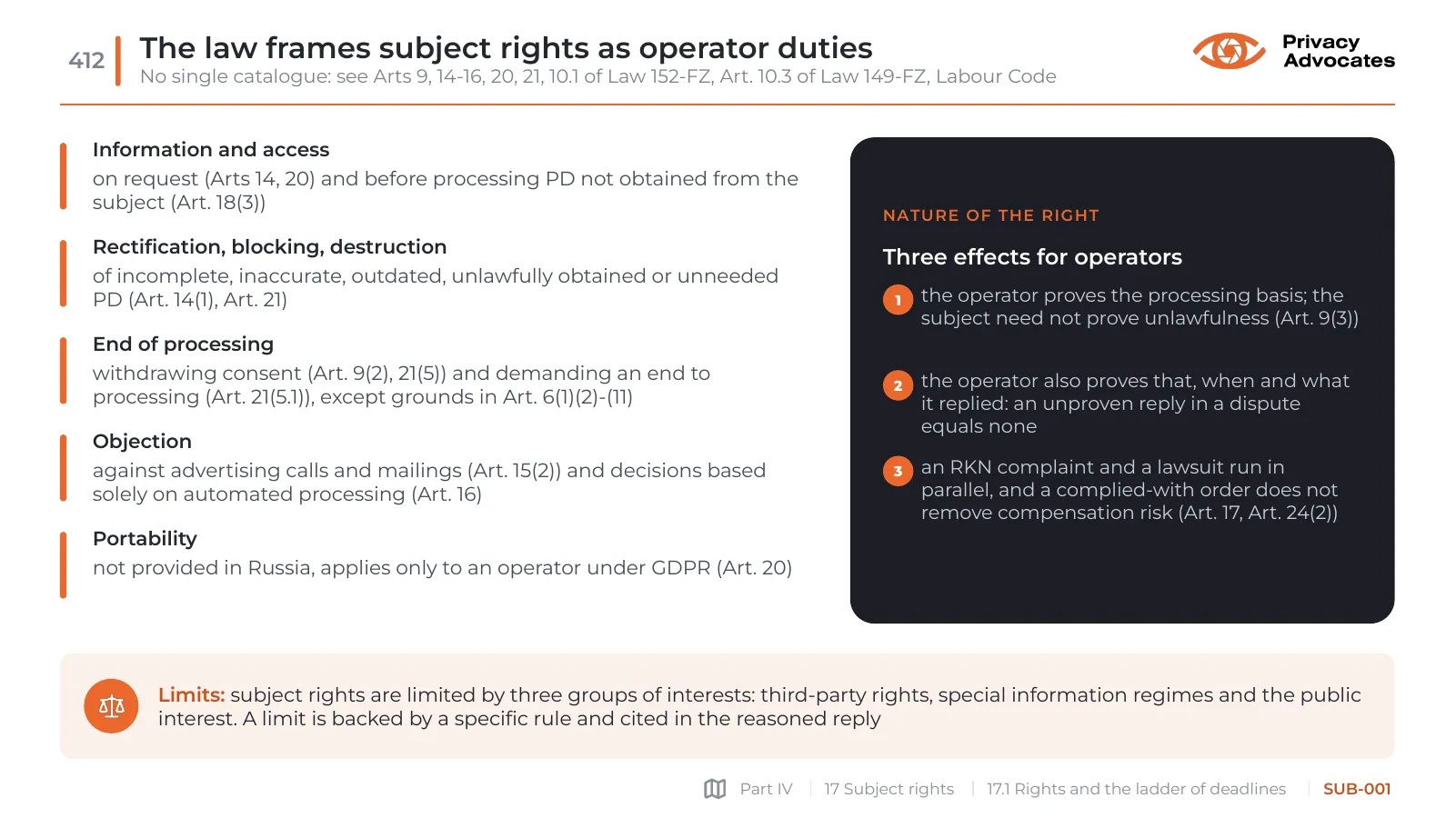
The law frames subject rights as operator duties
No single catalogue: see Arts 9, 14-16, 20, 21, 10.1 of Law 152-FZ, Art. 10.3 of Law 149-FZ, Labour Code
Slide text
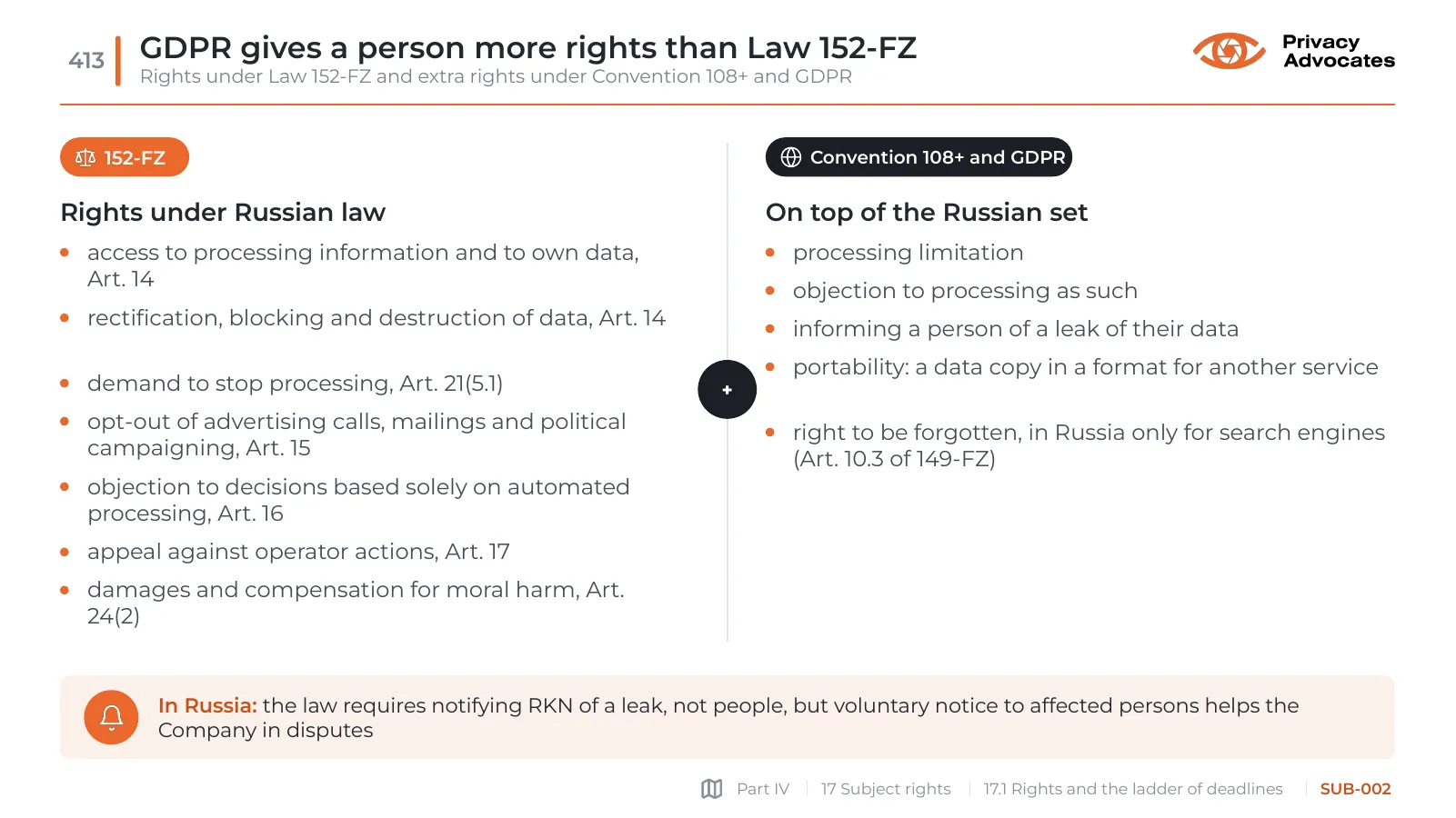
Information and access
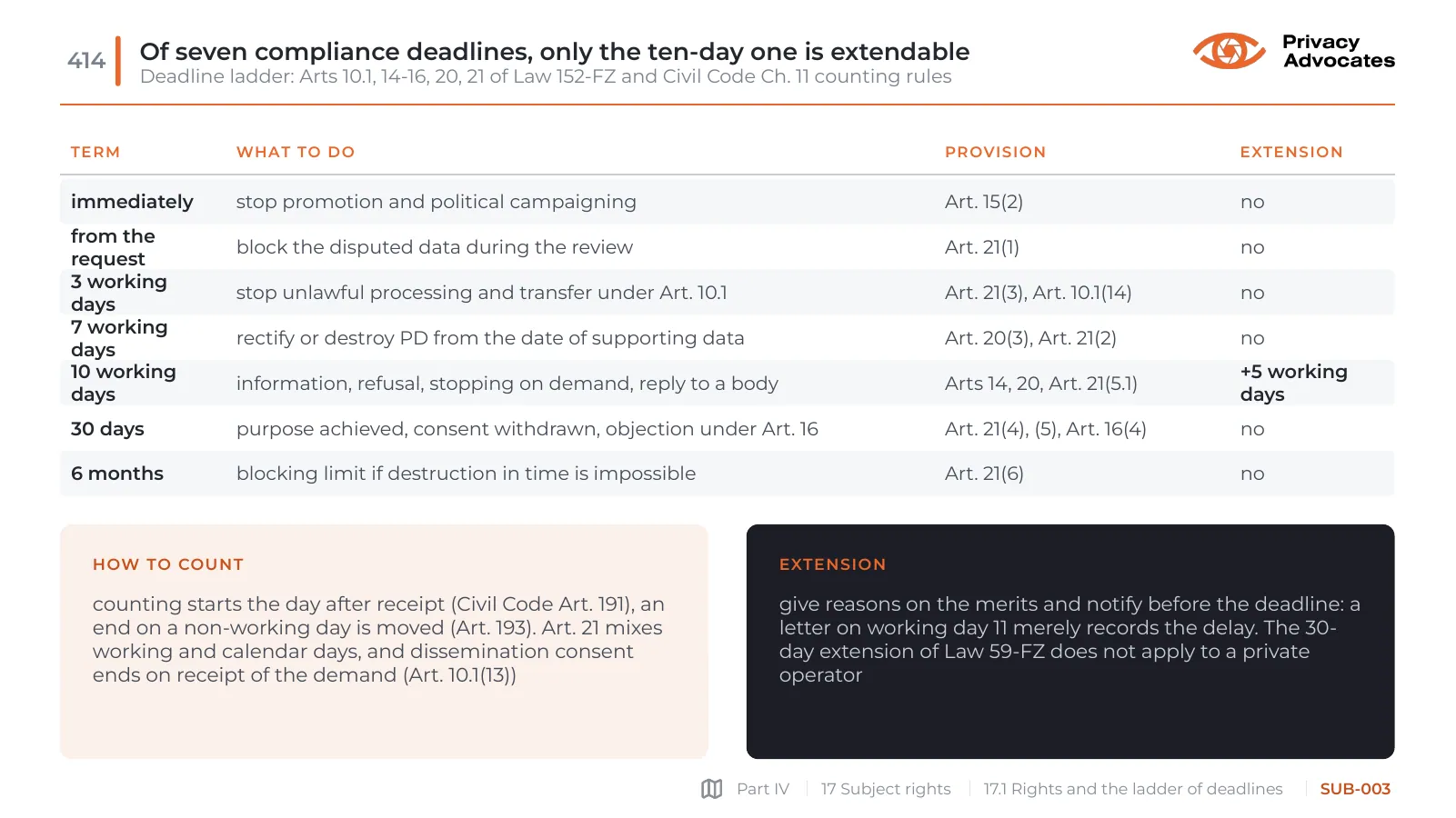
on request (Arts 14, 20) and before processing PD not obtained from the subject (Art. 18(3))
Rectification, blocking, destruction
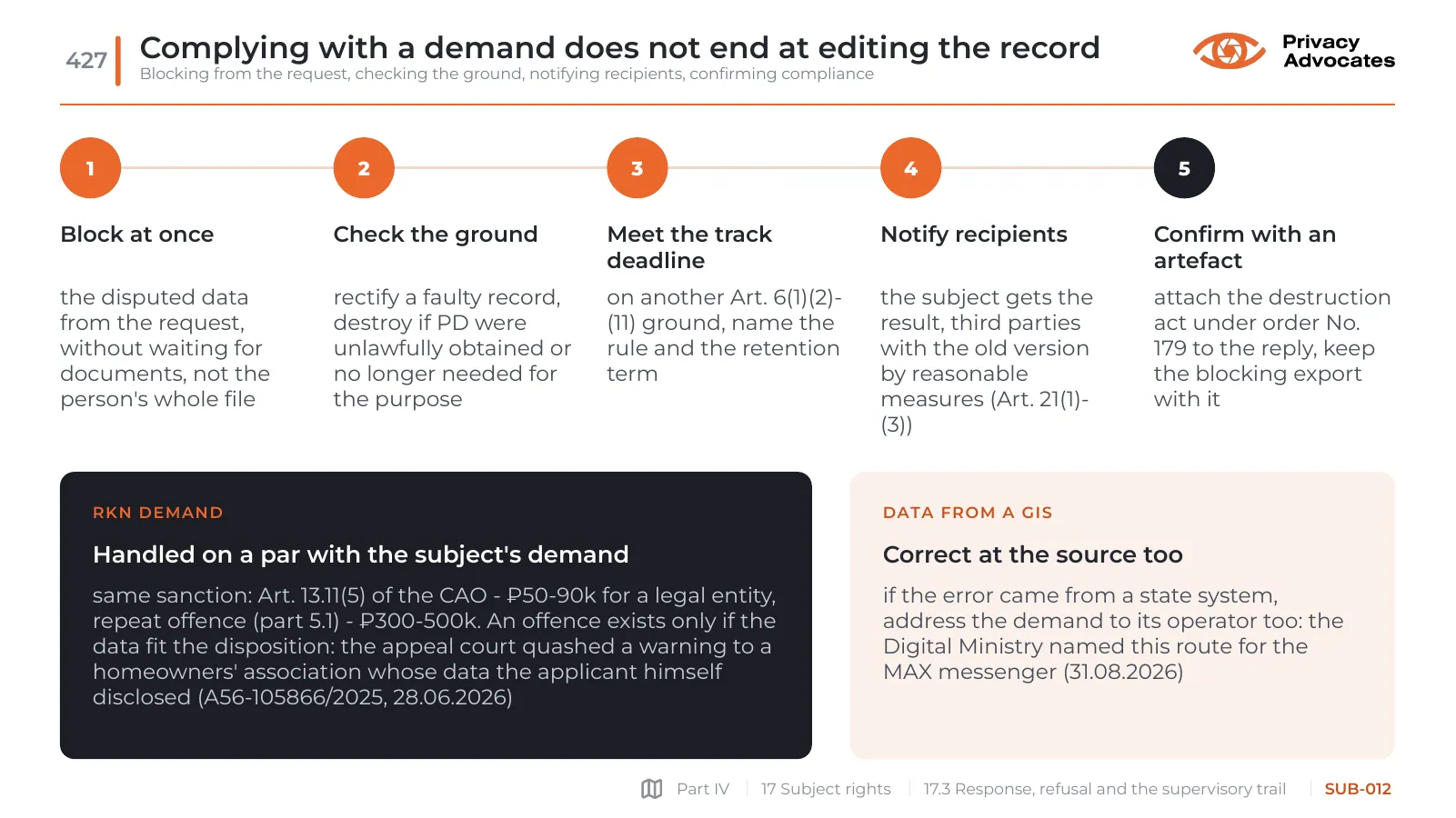
of incomplete, inaccurate, outdated, unlawfully obtained or unneeded PD (Art. 14(1), Art. 21)
End of processing
withdrawing consent (Art. 9(2), 21(5)) and demanding an end to processing (Art. 21(5.1)), except grounds in Art. 6(1)(2)-(11)
Objection
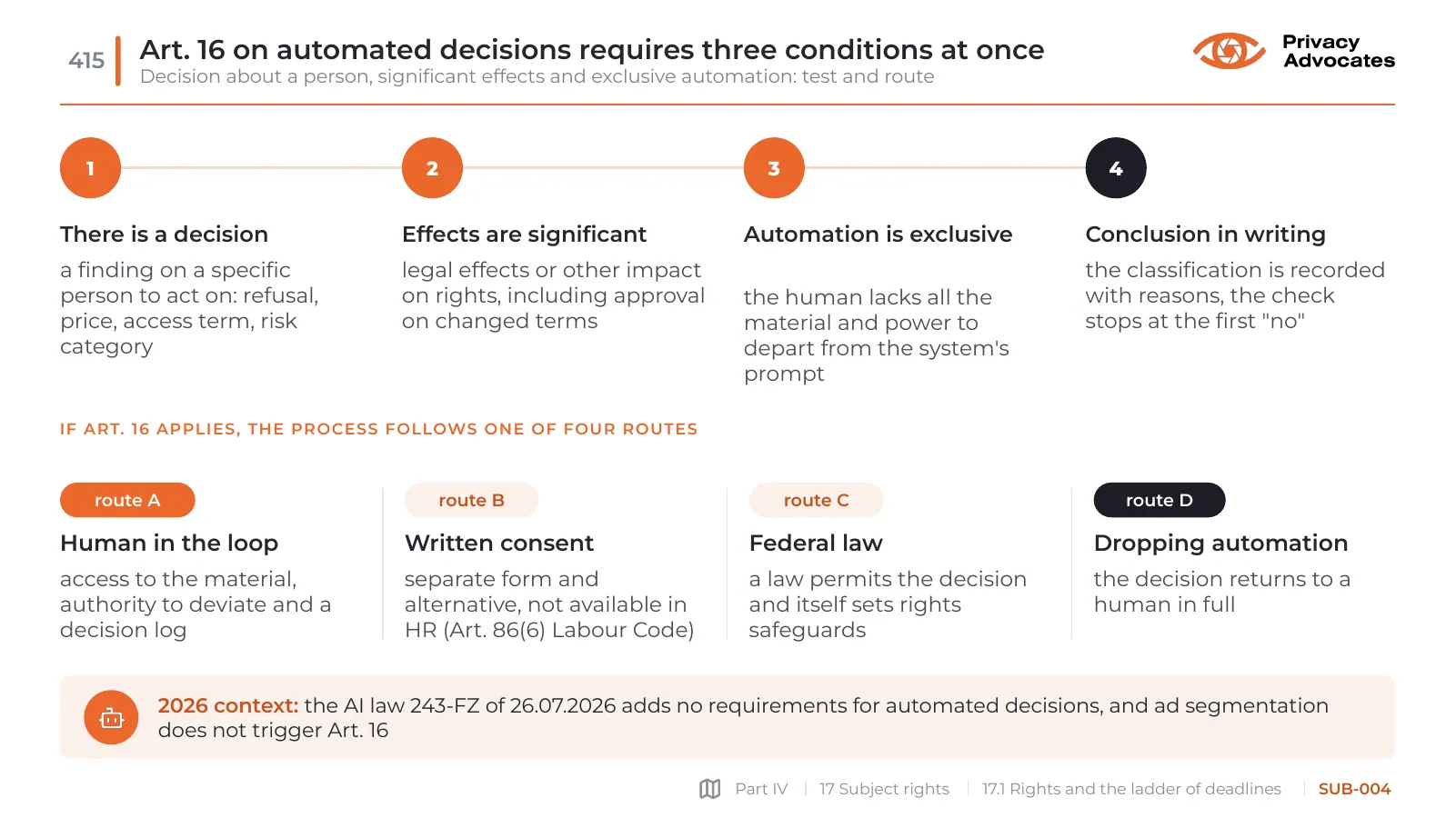
against advertising calls and mailings (Art. 15(2)) and decisions based solely on automated processing (Art. 16)
Portability
not provided in Russia, applies only to an operator under GDPR (Art. 20)
Nature of the right
Three effects for operators
- 1
- the operator proves the processing basis; the subject need not prove unlawfulness (Art. 9(3))
- 2
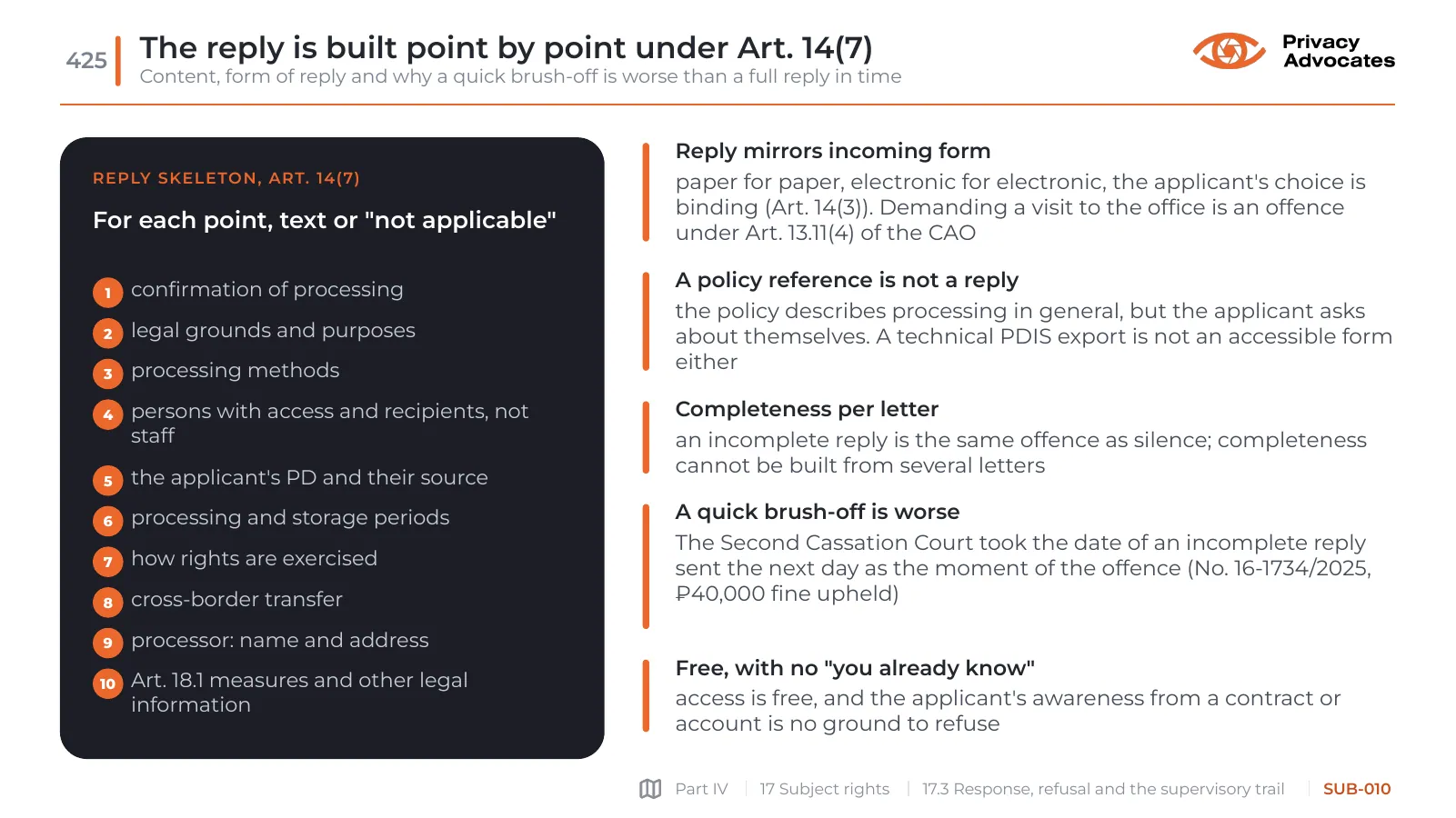
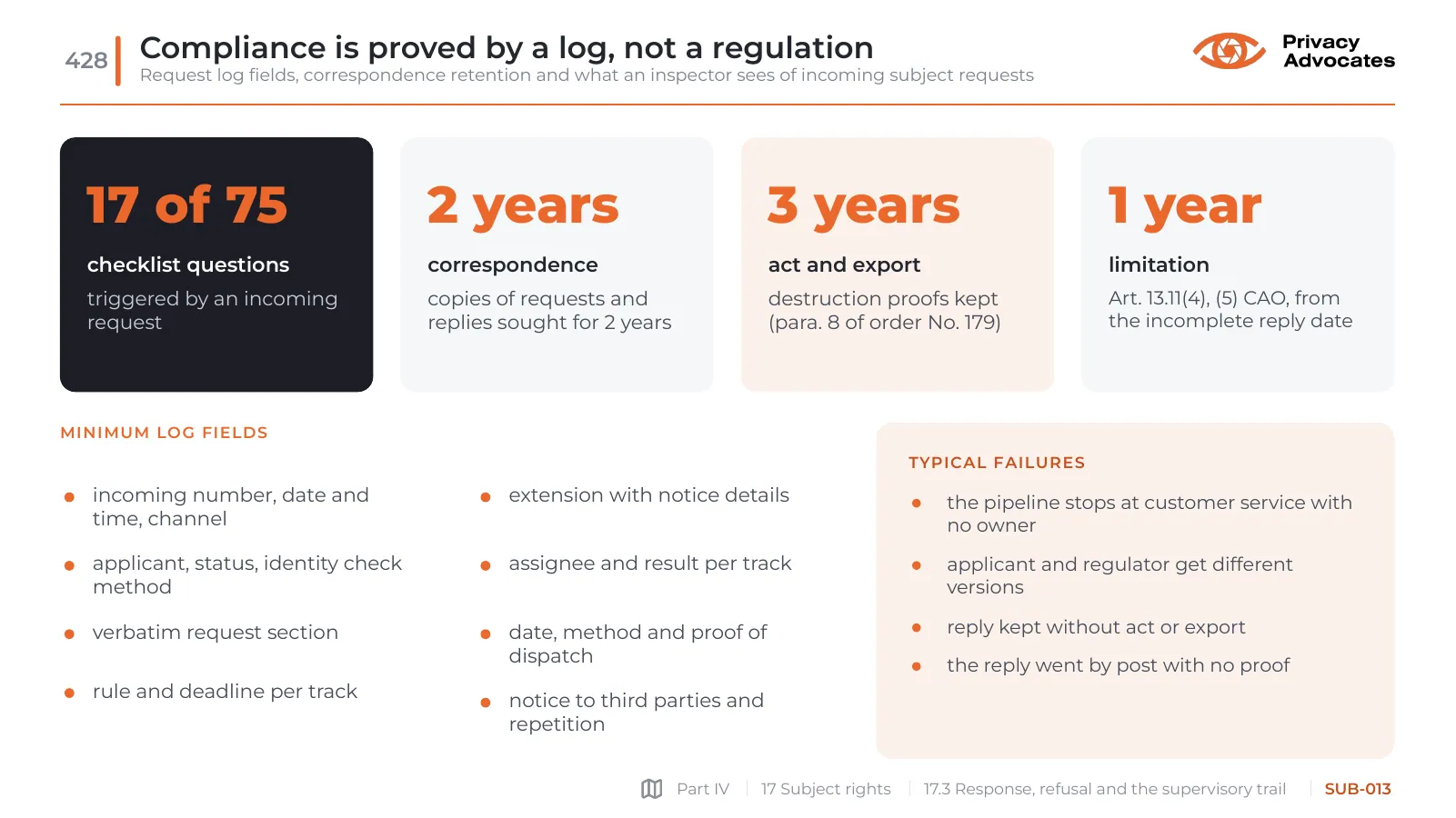
- the operator also proves that, when and what it replied: an unproven reply in a dispute equals none
- 3
- an RKN complaint and a lawsuit run in parallel, and a complied-with order does not remove compensation risk (Art. 17, Art. 24(2))
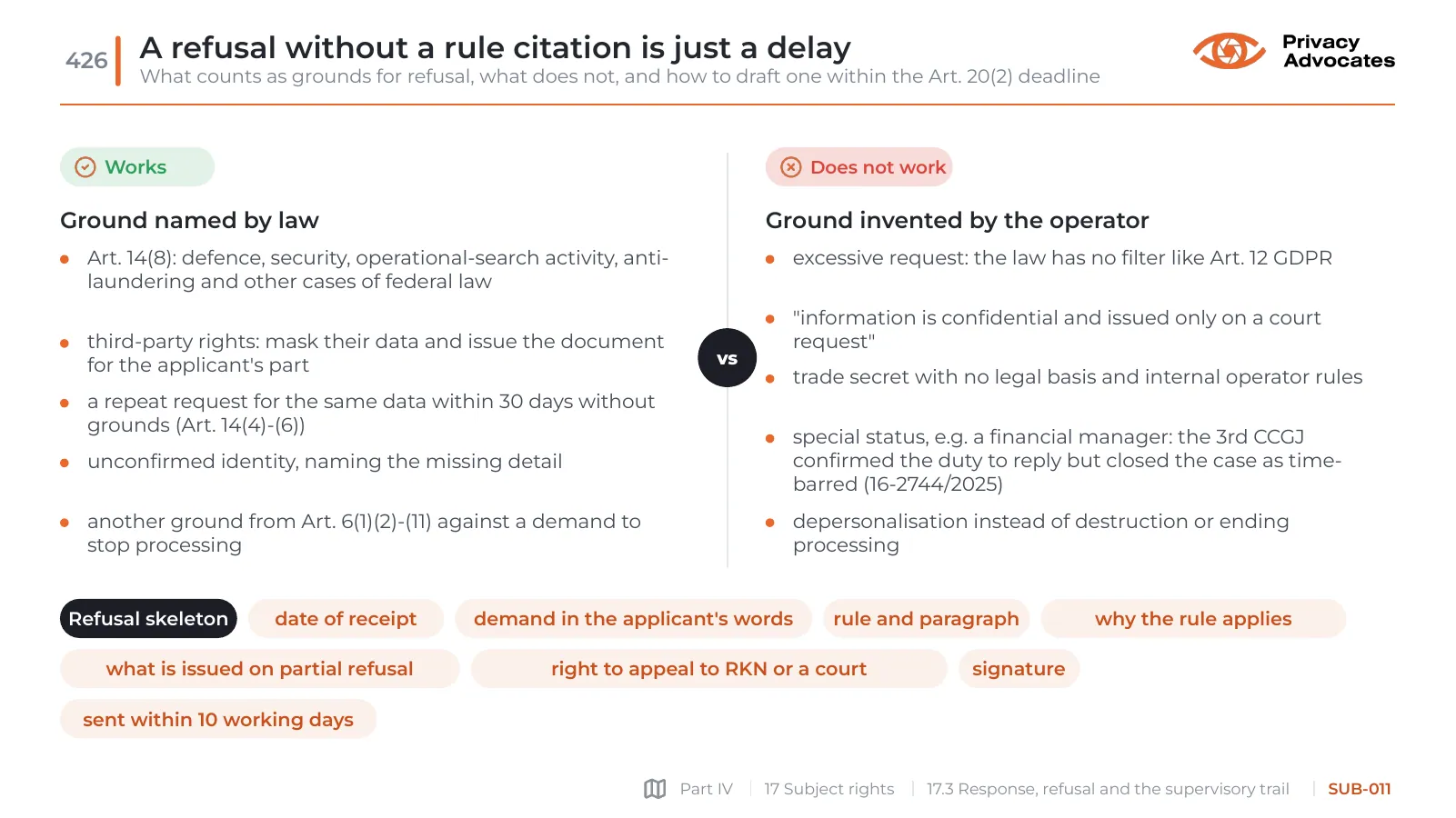
Limits: subject rights are limited by three groups of interests: third-party rights, special information regimes and the public interest. A limit is backed by a specific rule and cited in the reasoned reply